


ROLE
Principal Designer and Game Economist
YEAR
2019
GENRE
Simulation, RPG
PLATFORMS
Andriod, iOS
DESCRIPTION
Adventure Agency is crew management RPG and simulation game with D&D inspired elements! Contract and manage adventurers, dispatch them on quests, upgrade your headquarters, bring the fight to Tanvoc's Legion and save the land Evanora!
QUEST GENERATOR

My Role: I spearheaded the design and implementation of the Dynamic Quest Generator, the core system responsible for creating a near-endless stream of content for players in "Adventure Agency."
Problem: Hand-crafting hundreds of quests is a massive development bottleneck and can lead to repetitive gameplay. My challenge was to design a system that could dynamically generate quests that were not only appropriately scaled for the player's level but also felt thematically consistent and deeply integrated into the game's world.
My Solution: I designed the system with two main pillars:
-
Scalable Quest Logic: I designed the core procedural logic that combined various components (objectives, locations, enemies) into complete quests. The system automatically scaled enemy stats and reward values based on the player's level and introduced a rarity system to create exciting, high-stakes missions.
-
Curation and Collaboration: To avoid generic-feeling quests, I collaborated closely with the art and narrative teams to create a 'curated pool' of content. We defined which enemies and locations were lore-appropriate for each region, ensuring every generated quest felt grounded in the world of Evanora.
Outcome: The Quest Generator was a massive success, providing a robust and scalable content pipeline that significantly enhanced the game's replayability and long-term engagement. Our curation-focused approach was praised for overcoming the "generic" feel of typical procedural quests, allowing a small team to deliver a vast amount of immersive content.
SUCCESS EQUATION
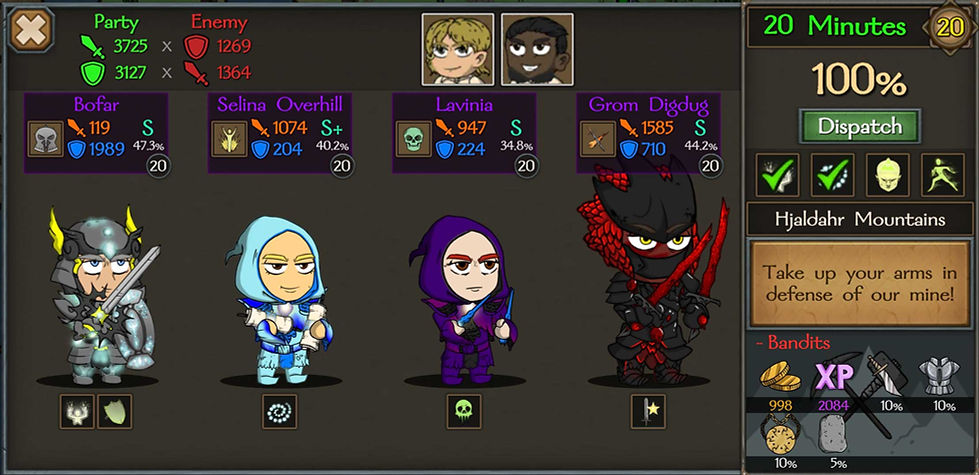
My Role: I designed the "Success Equation," the core analytical system that calculates and communicates a player's chance of success before they commit to a quest.
Problem: In a game with deep crew customization, players can feel lost or frustrated, often failing quests without understanding why. My challenge was to create a system that not only predicted outcomes but also taught players how to think strategically about their team composition.
My Solution: I designed the system with three key pillars:
-
Predictive Mathematical Model: I designed and balanced the core formula, which weighed multiple factors like adventurer levels, quest rarity, and gear. This provided a reliable success forecast that helped manage player expectations and reduce frustration.
-
Strategic 'Counter' System: I designed a deep 'counter' system where specific adventurer classes and abilities were more effective against certain enemy types. The Success Equation transparently reflected these advantages and disadvantages, turning quest preparation into an engaging strategic puzzle.
-
Clear Player Feedback: I collaborated with the UI team to ensure the system didn't just show a final percentage but also provided clear, actionable feedback, highlighting the specific factors that were helping or hurting their odds.
Outcome: The Success Equation became the strategic heart of the game. It transformed crew management from a guessing game into a rewarding puzzle, significantly reducing player frustration and giving immense value to collecting a wide variety of adventurers. This system was a key driver for long-term engagement and strategic depth.
HEADQUARTERS

My Role: I designed the upgradable Headquarters to serve as the game's central progression hub and the anchor of our core gameplay loop.
Problem: Players need a clear sense of long-term progression and a central "home" to ground their experience. My challenge was to create a core loop that seamlessly connected questing, rewards, and long-term goals, giving players a compelling reason to keep coming back.
My Solution: I designed the system with three key pillars:
-
Interlocking Progression: I designed the primary loop where players dispatch adventurers on quests to earn resources, which are then invested back into upgrading the HQ. Each HQ upgrade, in turn, unlocked higher tiers of quests (including legendary missions), creating a satisfying and endlessly scalable cycle.
-
Tangible Upgrades & Customization: I designed the specific upgrade paths to provide meaningful gameplay benefits, while also implementing a purely cosmetic decoration system. This catered to both players motivated by power and those motivated by creative expression.
-
A Living Hub: To make the headquarters feel alive, I designed a system for idle adventurers to roam the base between missions. This simple touch added immense immersive value, making the player's home base feel like a bustling center of activity.
Outcome: The Headquarters system successfully became the backbone of the game's long-term engagement strategy. This clear and rewarding core loop was the primary driver behind the game's exceptionally high player retention rates, giving players a strong sense of investment and a clear path for progression.
LEGENDARY CRAFTING

My Role: I designed the Legendary Crafting system to serve as the game's aspirational end-game, creating a compelling and repeatable content loop for our most dedicated players.
Problem: High-level players need meaningful, long-term goals to stay engaged. My challenge was to design an "elder game" that was not only challenging but also created a sense of daily urgency and community-wide excitement.
My Solution: I designed the system with three key pillars in mind:
-
Time-Limited 'Chase' Events: I designed the core loop around challenging legendary missions that were only available for 24 hours. This scarcity transformed a simple boss hunt into a daily "can't-miss" event, creating a powerful ritual for the community and driving daily logins.
-
Multi-Faceted Crafting Economy: To add strategic depth, I designed the crafting recipes to require a mix of resources: the time-limited boss components, rare runes from other activities, and a significant gold sink. This encouraged mastery of multiple game systems, not just a single grind.
-
Aspirational Rewards: I collaborated with the art team to ensure the legendary gear was visually stunning and prestigious. The goal was to create highly desirable "trophy" items that players would be proud to earn and show off.
Outcome: The Legendary Crafting system became the cornerstone of our end-game retention strategy. The daily missions drove consistent high-level engagement and social collaboration, while the prestige of the gear led to a massive surge in players sharing their decked-out heroes on social media, creating powerful organic marketing for the game.